





 We won’t be beaten on price...


ABTA protected


Southeast Asia Tradewinds
Scroll to sail

Southeast Asia Tradewinds
Embark on an unforgettable 16-day "Southeast Asia Tradewinds" voyage aboard the exquisite Oceania Riviera with Oceania Cruises. Discover the exotic allure of Asia, sailing from the spiritual heart of Bali to the futuristic marvel of Singapore, experiencing unparalleled luxury and exceptional culinary journeys at every turn.
This immersive itinerary unveils a tapestry of vibrant cultures and breathtaking landscapes. Explore the lush rice paddies of Bali, delve into the rich history of Ho Chi Minh City, witness the majestic temples of Bangkok, and unwind on the pristine beaches of Ko Samui, all while experiencing authentic local charm.
Indulge in Oceania Cruises signature gourmet dining and sophisticated ambiance as you seamlessly journey between captivating destinations like Surabaya, Semarang, Cam Ranh, and Kampong Saom. This is your chance to uncover the wonders of Southeast Asia in ultimate comfort and style, creating memories that will last a lifetime.
-
 Cruise Line: Oceania Cruises
-
 Ship: Oceania Riviera
-
 Duration: 16 Nights
-
 Departure: March
Southeast Asia Tradewinds Prices
Southeast Asia Tradewinds Gallery

Southeast Asia Tradewinds Itinerary

Day 1
Benoa, Bali
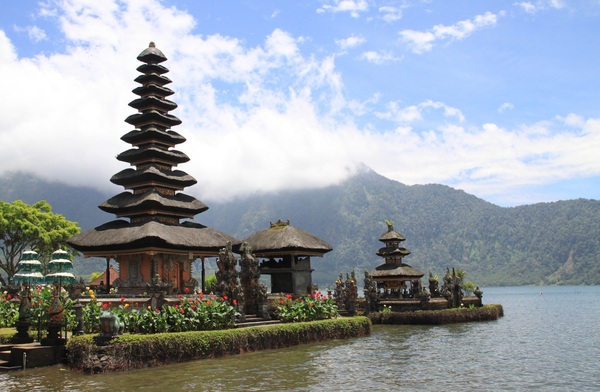
Bali really is as alluring as everyone says. This island, slightly bigger than Delaware, has it all: beaches, volcanoes, terraced rice fields, forests, renowned resorts, surfing, golf, and world-class dive sites. But what sets Bali apart from other nearby tropical destinations is Balinese tradition, and villagers dedicated to celebrating it. The hundreds of temples, dances, rituals, and crafts linked to their ancient Hindu faith aren't a show for tourists, but a living, breathing culture in which visitors are warmly received by the Balinese, who cherish their own identities.
Day 2
Celukan Bawang, Bali
Day 3
Surabaya
Day 4
Semarang
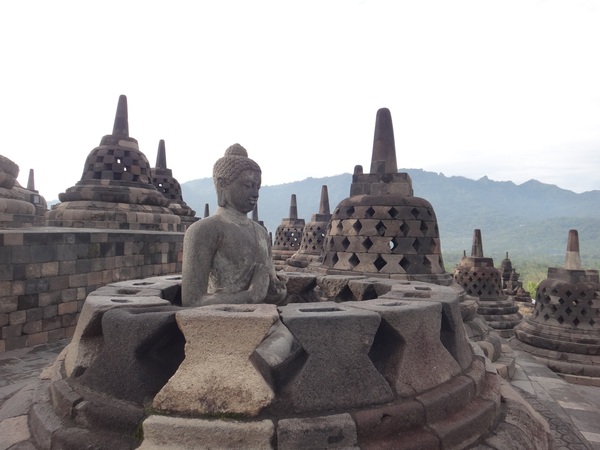
Semarang is one of the oldest cities in Indonesia, situated on Java's north coast between the shore of the Java Sea and a small ridge of mountains. Ceded to the Dutch West India Company in 1677 by King Amangkurat I in payment of his debts, it became their headquarters and the seat of the Dutch governor of the northeast provinces. Semarang's usefulness as a port waned due to the gradual silting up of the harbor; by the 19th century, Surabaya had eclipsed Semarang as Java's premier port. With a population of over one million, a third of whom are thought to be of Chinese extraction, Semarang is the largest city in Central Java and its administrative capital. The city consists of two parts: the coastal lowland where most of the commercial activities are found; and the hilly residential area. Although more a business center than a city for tourists, Semarang serves as a popular gateway to the mountainous interior of Central Java and to fabled Borobudur.
Day 7
Ho Chi Minh City
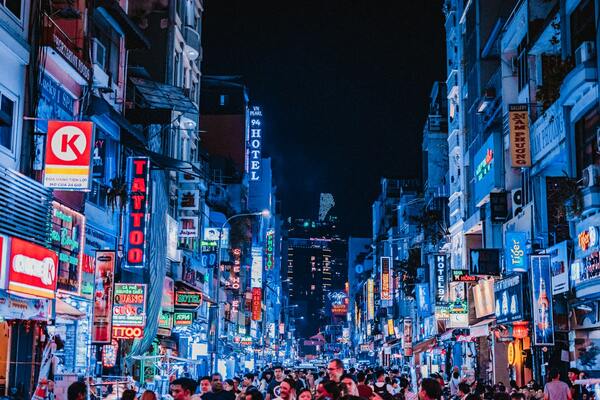
Romantically referred to by the French as the Pearl of the Orient, Ho Chi Minh City today is a super-charged city of sensory overload. Motorbikes zoom day and night along the wide boulevards, through the narrow back alleys and past vendors pushing handcarts hawking goods of all descriptions. Still called Saigon by most residents, this is Vietnam's largest city and the engine driving the country's current economic resurgence, but despite its frenetic pace, it's a friendlier place than Hanoi and locals will tell you the food—simple, tasty, and incorporating many fresh herbs—is infinitely better than in the capital.This is a city full of surprises. The madness of the city's traffic—witness the oddball things that are transported on the back of motorcycles—is countered by tranquil pagodas, peaceful parks, quirky coffee shops, and whole neighborhoods hidden down tiny alleyways, although some of these quiet spots can be difficult to track down. Life in Ho Chi Minh City is lived in public: on the back of motorcycles, on the sidewalks, and in the parks. Even when its residents are at home, they're still on display. With many living rooms opening onto the street, grandmothers napping, babies being rocked, and food being prepared, are all in full view of passersby.Icons of the past endure in the midst of the city’s headlong rush into capitalism. The Hotel Continental, immortalized in Graham Greene's The Quiet American, continues to stand on the corner of old Indochina's most famous thoroughfare, the rue Catinat, known to American G.I.s during the Vietnam War as Tu Do (Freedom) Street and renamed Dong Khoi (Uprising) Street by the Communists. The city still has its ornate opera house and its old French city hall, the Hôtel de Ville. The broad colonial boulevards leading to the Saigon River and the gracious stucco villas are other remnants of the French colonial presence. Grisly reminders of the more recent past can be seen at the city's war-related museums. Residents, however, prefer to look forward rather than back and are often perplexed by tourists' fascination with a war that ended 40 years ago.The Chinese influence on the country is still very much in evidence in the Cholon district, the city's Chinatown, but the modern office towers and international hotels that mark the skyline symbolize Vietnam's fixation on the future.
Day 8
Ho Chi Minh City
Romantically referred to by the French as the Pearl of the Orient, Ho Chi Minh City today is a super-charged city of sensory overload. Motorbikes zoom day and night along the wide boulevards, through the narrow back alleys and past vendors pushing handcarts hawking goods of all descriptions. Still called Saigon by most residents, this is Vietnam's largest city and the engine driving the country's current economic resurgence, but despite its frenetic pace, it's a friendlier place than Hanoi and locals will tell you the food—simple, tasty, and incorporating many fresh herbs—is infinitely better than in the capital.This is a city full of surprises. The madness of the city's traffic—witness the oddball things that are transported on the back of motorcycles—is countered by tranquil pagodas, peaceful parks, quirky coffee shops, and whole neighborhoods hidden down tiny alleyways, although some of these quiet spots can be difficult to track down. Life in Ho Chi Minh City is lived in public: on the back of motorcycles, on the sidewalks, and in the parks. Even when its residents are at home, they're still on display. With many living rooms opening onto the street, grandmothers napping, babies being rocked, and food being prepared, are all in full view of passersby.Icons of the past endure in the midst of the city’s headlong rush into capitalism. The Hotel Continental, immortalized in Graham Greene's The Quiet American, continues to stand on the corner of old Indochina's most famous thoroughfare, the rue Catinat, known to American G.I.s during the Vietnam War as Tu Do (Freedom) Street and renamed Dong Khoi (Uprising) Street by the Communists. The city still has its ornate opera house and its old French city hall, the Hôtel de Ville. The broad colonial boulevards leading to the Saigon River and the gracious stucco villas are other remnants of the French colonial presence. Grisly reminders of the more recent past can be seen at the city's war-related museums. Residents, however, prefer to look forward rather than back and are often perplexed by tourists' fascination with a war that ended 40 years ago.The Chinese influence on the country is still very much in evidence in the Cholon district, the city's Chinatown, but the modern office towers and international hotels that mark the skyline symbolize Vietnam's fixation on the future.
Day 9
Cam Ranh
Day 11
Kâmpóng Saôm
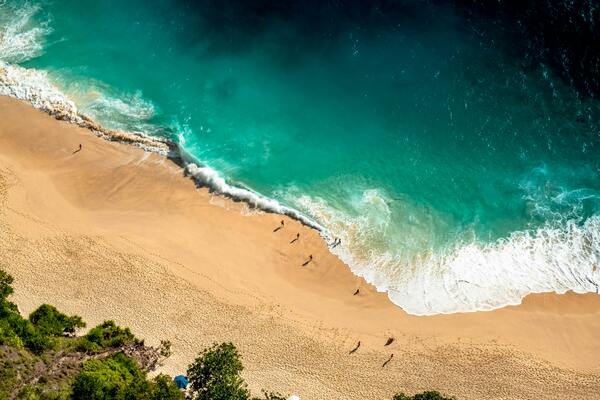
Sihanoukville is the premier beach destination in Cambodia for tourists and Cambodians alike, with golden white sands, tropical islands and mangrove jungles. A relatively new city, it sprang to life in 1955 with the construction of the only deep-sea port of a newly independent Cambodia. With the bay of Thailand surrounding it on three sides, Sihanoukville was named in honour of the former King Norodom Sihanouk in 1964. As Cambodia descended into civil war the town fell on hard times with the Khmer Rouge using the famous Independence Hotel for target practice. In 1993 peace returned to Cambodia and since then Sihanoukville has been slowly rebuilding itself. Today it attracts Asian Individual travellers, young students and back-packers but after decades of war and upheaval the town’s infrastructure is still very much in its infancy. A visit to Ream National Park offers pristine mangrove forests rich in wildlife with miles of beaches unmarked by footprints.
Day 12
Bangkok
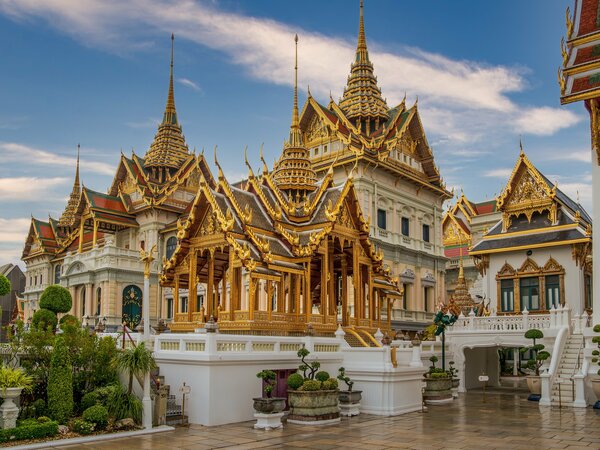
Bangkok, also known as the City of Angels and Venice of the East thrills with energy. There's such a vast array of sightseeing, shopping, and eating possibilities that you'll have little time to rest. When you do find a moment, pamper yourself with spa treatments, skyline-view bars, luxurious hotels, and excellent restaurants. The city is a mesmerizing blend of old and new, East and West, and dizzying contradictions. Temples and red-light districts, languid canals and permanent gridlock, streetside vendors and chic upscale eateries, all make their home together, all at the same time. Bangkok rarely fails to make an impression, and yes, you might need to go spend a few days on the beach to recover from it all. Although Bangkok is not known for jaw-dropping tourist attractions, it does have an endless supply of worthwhile pilgrimages. The Grand Palace, Wat Phra Kaew, and the Emerald Buddha are tops on every visitor's itinerary, and lesser-known temples, such as Wat Benjamabophit, the golden stupa of Wat Sakhet, and Wat Suthat, are all worthy of a stop. Besides temples, there are plenty of other interesting niches and touring possibilities to fit just about every interest. Take in a venom extraction and python feeding show at the Queen Saowapha Snake Farm, or go to the nearby Jim Thompson House to learn all about the famed Thai silk industry. If architecture is your forte, there is the Suan Pakkard Palace with its antique teak house collection, and the even more astounding Vimanmek Palace, which contains the world's largest golden teak building. Bangkok's Chinatown merits at least a day on every travel itinerary—be sure to check out the sprawling labyrinthine Flower and Thieves markets. Thai food is unrivaled for spice, taste, and variation. From multicourse meals to small street vendors, the one constant here is fresh and delicious at every level. You can have superlative roast duck or wonton noodles on a street corner for lunch and then be dining on world-class chef creations in the Oriental or Shangri-La hotels for supper. It doesn't have to be all spicy Thai either, as Bangkok is home to excellent French, Italian, and other world cuisines, and you need a few years just to make a dent in all the options that are available. The Old City is a major destination for travelers, as it's home to opulent temples like Wat Po and Wat Phra Kaew. Across the river is Thonburi, a mostly residential neighborhood, where you can find Wat Arun. At the northern tip of the Old City is Banglamphu, one of Bangkok's older residential neighborhoods. It's best known now for Khao San Road, a backpacker hangout, though the neighborhood has much more to offer, especially when it comes to street food. North of Banglamphu is Dusit, the royal district since the days of Rama V. East of the Old City is Chinatown, a labyrinth of streets with restaurants, shops, and warehouses. Farther down the Chao Phraya River is bustling Silom Road, one of the city's major commercial districts. Patpong, the city's most famous of several red-light districts, is also here. Bang Rak is home to some of the city's leading hotels: the Mandarin Oriental, the Peninsula, the Royal Orchid Sheraton, and the Shangri-La. To the north of Rama IV Road is Bangkok's largest green area, Lumphini Park. Continue north and you reach Sukhumvit Road, once a residential area. More recently, Thong Lor, farther east along Sukhumvit, has become the "in" neighborhood for those want to see and be seen. The Nana and Asok areas of Sukhumvit are now home to the even busier red-light entertainment districts (Nana and Soi Cowboy) than Patpong.
Day 13
Bangkok
Bangkok, also known as the City of Angels and Venice of the East thrills with energy. There's such a vast array of sightseeing, shopping, and eating possibilities that you'll have little time to rest. When you do find a moment, pamper yourself with spa treatments, skyline-view bars, luxurious hotels, and excellent restaurants. The city is a mesmerizing blend of old and new, East and West, and dizzying contradictions. Temples and red-light districts, languid canals and permanent gridlock, streetside vendors and chic upscale eateries, all make their home together, all at the same time. Bangkok rarely fails to make an impression, and yes, you might need to go spend a few days on the beach to recover from it all. Although Bangkok is not known for jaw-dropping tourist attractions, it does have an endless supply of worthwhile pilgrimages. The Grand Palace, Wat Phra Kaew, and the Emerald Buddha are tops on every visitor's itinerary, and lesser-known temples, such as Wat Benjamabophit, the golden stupa of Wat Sakhet, and Wat Suthat, are all worthy of a stop. Besides temples, there are plenty of other interesting niches and touring possibilities to fit just about every interest. Take in a venom extraction and python feeding show at the Queen Saowapha Snake Farm, or go to the nearby Jim Thompson House to learn all about the famed Thai silk industry. If architecture is your forte, there is the Suan Pakkard Palace with its antique teak house collection, and the even more astounding Vimanmek Palace, which contains the world's largest golden teak building. Bangkok's Chinatown merits at least a day on every travel itinerary—be sure to check out the sprawling labyrinthine Flower and Thieves markets. Thai food is unrivaled for spice, taste, and variation. From multicourse meals to small street vendors, the one constant here is fresh and delicious at every level. You can have superlative roast duck or wonton noodles on a street corner for lunch and then be dining on world-class chef creations in the Oriental or Shangri-La hotels for supper. It doesn't have to be all spicy Thai either, as Bangkok is home to excellent French, Italian, and other world cuisines, and you need a few years just to make a dent in all the options that are available. The Old City is a major destination for travelers, as it's home to opulent temples like Wat Po and Wat Phra Kaew. Across the river is Thonburi, a mostly residential neighborhood, where you can find Wat Arun. At the northern tip of the Old City is Banglamphu, one of Bangkok's older residential neighborhoods. It's best known now for Khao San Road, a backpacker hangout, though the neighborhood has much more to offer, especially when it comes to street food. North of Banglamphu is Dusit, the royal district since the days of Rama V. East of the Old City is Chinatown, a labyrinth of streets with restaurants, shops, and warehouses. Farther down the Chao Phraya River is bustling Silom Road, one of the city's major commercial districts. Patpong, the city's most famous of several red-light districts, is also here. Bang Rak is home to some of the city's leading hotels: the Mandarin Oriental, the Peninsula, the Royal Orchid Sheraton, and the Shangri-La. To the north of Rama IV Road is Bangkok's largest green area, Lumphini Park. Continue north and you reach Sukhumvit Road, once a residential area. More recently, Thong Lor, farther east along Sukhumvit, has become the "in" neighborhood for those want to see and be seen. The Nana and Asok areas of Sukhumvit are now home to the even busier red-light entertainment districts (Nana and Soi Cowboy) than Patpong.
Day 14
Ko Samui
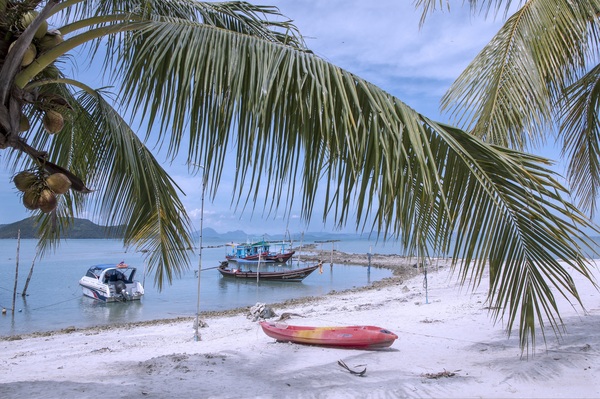
Koh Samui is the most popular tourist destination on the Western Gulf coast, which isn't surprising, considering the island's gorgeous beaches, perfect weather, and sparkling blue, almost turquoise, water. Koh Samui has seen rapid development since the 1990s, and you'll encounter hotels in all price ranges.Koh Samui is half the size of Phuket, so you could easily drive around it in a day. But Koh Samui is best appreciated by those who take a slower, more casual approach. Most people come for the sun and sea, so they head straight to their hotel and rarely venture beyond its beach. But it's worth exploring beyond your lodging. Every beach has its own character, and you might find the perfect one for you. One beach many visitors find to their liking is Chawaeng. On Koh Samui's east coast, this stretch of glistening white sand is divided into two main sections—Chawaeng Yai (yai means "big") and Chawaeng Noi (noi means "little"). You'll find the greatest variety of hotels, restaurants, and bars here. Despite the crowds, Chawaeng is no Pattaya or Patong—the mood is very laid-back. A rocky headland separates Chawaeng Lamai Beach, whose clear water and long stretch of sand were the first place on the island to attract developers. More budget accommodations are available here than in Chawaeng, and there are some happening nightclubs.On the west coast of Koh Samui, Na Thon is the island's primary port and the spot where ferries arrive from the mainland. It's home to the island's governmental offices, including the Tourism Authority of Thailand, and there are banks, foreign-exchange booths, travel agents, shops, restaurants, and cafés by the ferry pier. A few places rent rooms, but there's really no reason to stay here—nicer accommodations can be found a short songthaew ride away.To the north and east of Na Thon lie a few beaches worthy of exploration. Laem Yai, 5 km (3 miles) north, has great seafood. East of here, a small headland separates two low-key communities on the northern shore, Mae Nam and Bophut Beach. Mae Nam is also the departure point for boats bound for Koh Phangan and Koh Tao . Just south of the Samui's northeastern tip you'll find sandy Choengmon Beach, a good area for swimming that's not overdeveloped.
Day 16
Singapore
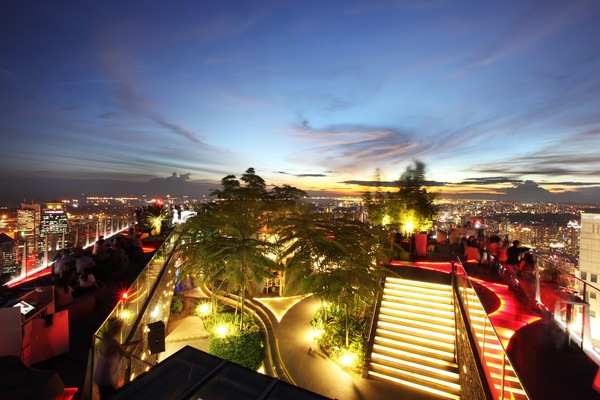
The main island of Singapore is shaped like a flattened diamond, 42 km (26 miles) east to west and 23 km (14 miles) north to south. Near the northern peak is the causeway leading to West Malaysia—Kuala Lumpur is less than four hours away by car. It is at the southern foot where you will find most of the city-state’s action, with its gleaming office towers, working docks, and futuristic "supertrees," which are solar-powered and serve as vertical gardens. Offshore are Sentosa and over 60 smaller islands, most uninhabited, that serve as bases for oil refining or as playgrounds and beach escapes from the city. To the east is Changi International Airport, connected to the city by metro, bus, and a tree-lined parkway. Of the island's total land area, more than half is built up, with the balance made up of parkland, farmland, plantations, swamp areas, and rain forest. Well-paved roads connect all parts of the island, and Singapore city has an excellent, and constantly expanding, public transportation system. The heart of Singapore's history and its modern wealth are in and around the Central Business District. The area includes the skyscrapers in the Central Business District, the 19th-century Raffles Hotel, the convention centers of Marina Square, on up to the top of Ft. Canning. Although most of old Singapore has been knocked down to make way for the modern city, most colonial landmarks have been preserved in the CBD, including early-19th-century buildings designed by the Irish architect George Coleman.
Day 17
Singapore
The main island of Singapore is shaped like a flattened diamond, 42 km (26 miles) east to west and 23 km (14 miles) north to south. Near the northern peak is the causeway leading to West Malaysia—Kuala Lumpur is less than four hours away by car. It is at the southern foot where you will find most of the city-state’s action, with its gleaming office towers, working docks, and futuristic "supertrees," which are solar-powered and serve as vertical gardens. Offshore are Sentosa and over 60 smaller islands, most uninhabited, that serve as bases for oil refining or as playgrounds and beach escapes from the city. To the east is Changi International Airport, connected to the city by metro, bus, and a tree-lined parkway. Of the island's total land area, more than half is built up, with the balance made up of parkland, farmland, plantations, swamp areas, and rain forest. Well-paved roads connect all parts of the island, and Singapore city has an excellent, and constantly expanding, public transportation system. The heart of Singapore's history and its modern wealth are in and around the Central Business District. The area includes the skyscrapers in the Central Business District, the 19th-century Raffles Hotel, the convention centers of Marina Square, on up to the top of Ft. Canning. Although most of old Singapore has been knocked down to make way for the modern city, most colonial landmarks have been preserved in the CBD, including early-19th-century buildings designed by the Irish architect George Coleman.
Southeast Asia Tradewinds Ships
Recommended Deals like Southeast Asia Tradewinds
Southeast Asia Tradewinds
 Oceania Cruises

Departure:
March
VISITING:
Bali
Celukan Bawang, Bali
Surabaya
Semarang
Ho Chi Minh City
Cam Ranh
Kampong Saom
Bangkok
Ko Samui
Singapore
FROM
£
6,119 pp
Join the Crui.se Club
Points That Pay
Earn 25 points (£25) just for joining — and collect more on bookings, reviews, and referrals.
Exclusive Member Deals
Unlock off-market offers reserved only for Crui.se Club members.
Early Access Perks
Be the first to book with pre-launch notifications and special member-only booking windows.
Cruise With Confidence
Our mission at wordpress-1024654-4169282.cloudwaysapps.com is to help you and your loved one’s book and experience the best cruise holiday imaginable. We’re different in that, our customers come first, not our suppliers or profit margins. Get in touch and let us help you set sail.


Over 20 cruise brands to choose from

Low deposits from £500

All Inclusive cruises

Best deals & discounts

Community driven

Brand agnostic

We take care of everything

Custom built cruise holidays


